


The Crown Jewel
Updated: Apr 11

Those close to us believe the crown jewel of the company’s 45 years of existence began in 1992 when the Battleship North Carolina Memorial’s new Executive Director, Navy Captain David Scheu, approached us for consultative help with World War II’s most decorated ship’s battle and war-ravaged Teak decking. He had just learned from a private Department of Defense communication that BB-55 was an expected site of presidential celebration on VJ-Day’s the 50th Anniversary that ended World War II on 2 Sep 1995.
We inspected the Teak decking together, determining without doubt that it was beyond repair and needed replacement. A few days later a phone call came to Dean Hardwoods from Asia-Pacific Exchange Foundation’s Executive Director requesting a visit with us as the major East Coast Teak trader. He was leading a delegation from Burma around the USA to important Teak trading companies headed by no less than Burma’s Minister of Forestry, a Lieutenant General in the Army which controlled all aspects of life and business after its military coup seizing control of the country from a freedom loving faction, making the Army black-listed by the US Government.
Nevertheless, it seemed like a possible opportunity for the Battleship’s new director to receive some help with Teak from the country she had helped liberate from Japanese Army occupation during World War II; so I floated an idea to Director/Captain Scheu that if he extended an invitation to the expected delegation for his personal tour of the ship, maybe some help with needed restoration Teak could be forthcoming from the country with the world’s largest Teak forests and sawmill production.
Captain Scheu relished the possibility and laid out the red carpet for the Minister and his delegation a month later during their visit with Dean Hardwoods, not only with his personalized tour, but including a catered five-star luncheon in the former Admiral’s cabin which he invited me to enjoy with them. After that wonderful affair, our host invited the Minister and his delegation to view the battleship’s memorabilia display including the impressive busts of naval heroes surrounded by flags and a memorial listing by name all the North Carolina men and women who lost their lives for the cause of international freedom in World War II.
As a military man, Lt. Gen. Chit Sway was visibly moved, and upon leaving the impressive display area to depart, he told the Captain that he would do everything possible to lend assistance toward Teak replacement when the dele-gation returned home in a few weeks after an arranged meeting in Washington with the chairman of the U.S. Senate Foreign Relations Committee, raising hope for the needed Teak.

Both Wilmington and New Hanover County officials added to their welcome at a dinner party Mary and I hosted for the delegation in further red-carpet treatment at the Hilton Hotel where they resided as our guests, plus a cruise the next day on the Teak and Mahogany laden Liberty III, Dean Hardwoods’ floating showroom. (A picture of the Minister and Tom with the Battleship in the background appears as an addendum.)
Unfortunately, while later visiting with us at Dean Hardwoods’ riverside lumber operation, the minister was stunned by word from Washington that the expected meeting with Senator Jesse Helms, Chairman of the powerful US Senate Foreign Relations, had been cancelled. Understanding the huge “loss of face” it would be for the Asians, I called Senator Helms office requesting reconsideration as a political ally and fellow arch-conservative friend of his and his wife Dot’s close friends in Wilmington.
It would be several hours before a return call came with Senator Helms reconsideration, but with provisions that seemed harsh to me without understanding how blacklisted the Burmese had become to the U.S. Government after an Army faction had ruthlessly seized control of the country from a political faction of free citizens allied with Nobel Prize winning Aung San Suu Kyi, daughter of the founding father of Burmese democracy General Aung San, who had been assassinated with the expected cabinet members of the expected new Burmese government when the British Crown Colony granted it independence - by a rival Army faction;
Senator Helms conditions for a personal visit with him were:
The Minister and his entourage would be granted the requested meeting, but only if escorted by the Deans.
All notoriety or pictures with Senator Helms were prohibited.
Arriving for the meeting, we and the Burmese delegation were taken into the cavernous Foreign Relations meeting room and seated on the left side of the biggest conference table imaginable with the 3-star-General Minister for Forestry Chit Sway in plain clothes seated next to the head of the table which was reserved for Senator Helms. Members of the minister’s delegation were seated down the left side of the table from him, and my place with Mary behind me was between but diagonally away from the minister and Senator Helms.
Across the table from us were three U.S. Army generals in uniform with their aides, plus Asia-Pacific Exchange Foundation’s tour director who was an Army general and CIA operative for our government but in plain clothes to conceal that identity from the Burmese. As his escort I seated myself close to the Minister, diagonally away from the corner of the table between where the Minister was seated and Senator Helm’s was to be seated at the head of the table, with Mary close behind me.
After waiting a few minutes, a door from the chairman’s office opened into the conference opened, and in strode the big and tall, dark suited, and grim-faced Senator Jesse Helms to the conference table, seating himself, and then shockingly, without a greeting, he pointed a long arm and finger in the Minister’s face and angrily told him (in my paraphrase):
“Mister!!! We in America do not approve of the Army’s harsh treatment of civilians in your country, and the United States Government I represent will not accept Burma as a trading partner again until you restore their human rights!!!”
Before the Minister could utter a word in response, the Senator rose and turned his back on him to leave when I stood up next to his ear quickly explaining that they were visiting to help the Battleship Memorial replace needed Teak decking for her restoration, with us not buying and selling it for profit. Freezing in place momentarily in reconsideration, he then turned with the same outstretched arm and finger toward one of the senior military aides in a summons demonstrating civilian control of our military, amazing for me to see and hear after being a low-ranking enlisted U.S. Marine Reservist:
(In my paraphrase) “General, come over here!!! There has been some miscommunication; so, make sure The Congressional Record states that I will not oppose otherwise embargoed shipments of Teak into the United States from Burma that are intended to help restore the Battleship North Carolina Memorial.”
Then, without apology to the Minister, he turned his back on him again and returned to his office as everyone in the room sat in shock before leaving the scene of a never-to-be-forgotten event.
Understanding all the foregoing, it was a happy day when we received a letter from Forestry Minister Chit Sway on his official government stationery, thanking us for our hospitality that included a river cruise on Liberty III with us when Tom Dean was pictured with him while passing astern of Battleship North Carolina, and inviting us in turn to visit Burma as his personal guests to see its progress in production facilities since my last visit there 20-years before.

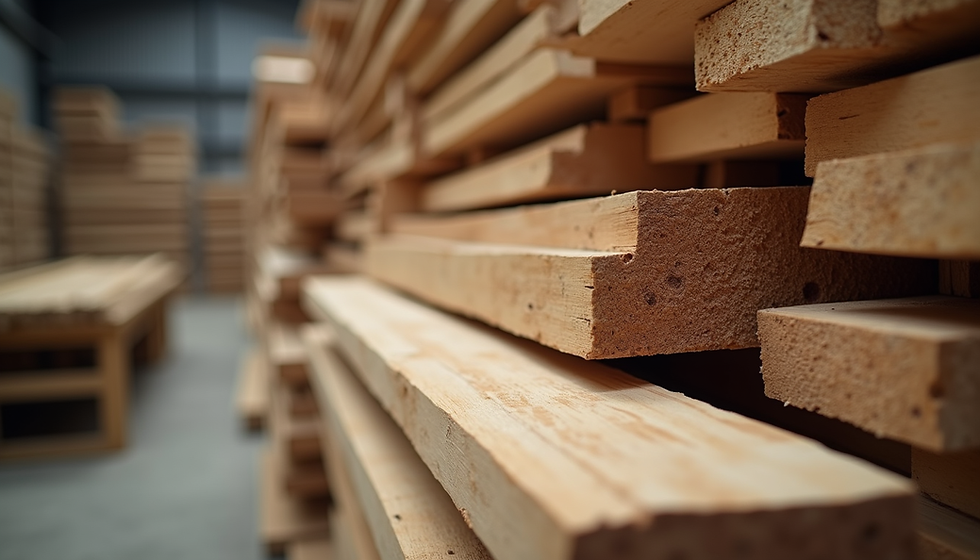
In another letter, the Minister conveyed his thanks to Captain/Director Scheu for his personalized tour of USS North Carolina’s Battleship Memorial and for hosting such a pleasant luncheon for him and his delegation. More im-portantly, his letter contained Burma’s 20-ton gift of Teak toward her restoration, and the offer to produce for sale, at a big discount from world market price, enough additional Teak to replace all decking, which was gladly accepted by the governing USS North Carolina Battleship Memorial Commission. Altogether, it amounted to 110,000 board feet of Teak, ten 40’ tractor trailer loads, more than an acre of replacement coverage. A picture of the lumber on our yard with Captain Scheu and his crew with Tom and me accompanies this text as an addendum.
Mary’s and my son Tom’s later visited Rangoon with me in acceptance of the Minister’s invitation. Tom made a second trip by himself to oversee the large shipment in bundles from Rangoon to Singapore in break-bulk, above- deck manner on an antiquated Burmese transport ship, and several days there supervising its transfer into to containers for ocean transport to us in Wilmington where he personally oversaw kiln drying all the Teak to the proper moisture content for new Battleship decking, manufacturing every piece of it to prescribed U.S. Navy specifications, and its delivery to secure storage next to the Battleship. In doing all that he became “the unsung hero” of our patriotic duty to make such an all-out effort toward restoration of the most decorated Battleship in World War II.
My son Tom and I flew to Burma in acceptance of its Minister for Forestry’s invitation to tour the country’s large number of Teak production facilities as his personal guest. That followed the Battleship Commission’s acceptance of Burma’s 20-ton donation of Teak through Forestry Minister Chit Sway, and an offer to produce enough more at a discounted price for the total redecking of the Battleship North Carolina Memorial. That followed his delegation’s trade promotion visit with us, and personalized tour of the ship by her captain/director who then hosted a catered luncheon aboard in 1994.
When that 110,000 board feet of Teak was ready in 1997, Tom flew alone to oversee its shipment from Burma at the very same time newly elected Bill Clinton’s Secretary of State Madeleine Albright announced US blacklisting the country for overthrowing its pro-democracy government. It was more than a little disquieting for Tom to see her announcement on CNN News in the Singapore Airport transit lounge while waiting for the last leg of his long journey back to Rangoon renamed Yangon by the Army which also renamed the country Myanmar.
Nevertheless, he boarded the scheduled Burma Airways plane there, and after landing was grilled by high-ranking Army officers, asking him why his government had become so hostile to them. With his assurance that he had no idea why the hostility had arisen, he was allowed to undertake his mission of overseeing the top priority shipment which Myanmar intended to curry favor with the United States government.
According to its ordinary custom, the destination for its 110,000 board feet of Teak was to Singapore in bundles above deck on an aging Burmese transport ship where Tom then spent several days arranging for its loading into a dozen containers and further transport to us in North Carolina for the Battleship Memorial.

Upon arrival, Tom then personally supervised unloading the containers, putting it all on air-drying stickers, kiln drying and manufacturing every piece of the Teak to Navy specifications with his hands-on training in molder machine operation. and finally supervising its transport to secure storage on the grounds of the Battleship NC.
In summary, Tom is a truly “unsung hero” of the Battleship North Carolina, although the Memorial Commission did recognize the Minister’s tour director and me, citing each of us on separately engraved plaque as an Honorary Fleet Admirals of the North Carolina Navy, on nicely framed pictures of the Battleship North Carolina in her Pacific operations, the most decorated such ship in World War II.

Considering Burma’s generosity, even with the futile hope of its ruthless Army regime establishing a positive relationship with the United States, we expressed our genuine thanks with an invitation to the U.S. Ambassador from Burma for a weekend of golf and other entertainment on Bald Head Island which was enjoyed by all involved.
During the weekend, however, a possibly reversing event took place on Bald Head’s beautiful golf course that winds through the lowland swampy water by the Atlantic Ocean when the Ambassador led our foursome up one side of a green with us following, without his knowing it to be the natural habitat of salt-water man-eating Alligators. Seeing an enormous perhaps 14’ gator silently basking in the sun and too close for comfort, a member of our foursome called out a warning about the danger lurking ahead when all withdrew to safety. At that moment all I could think of was an otherwise big headline in the next day’s newspaper: AMBASSADOR EATEN BY ALLIGATOR!!!
.........
...................

Comments